Diagnostics – Iris and tongue diagnosis: what they show – and what they don't
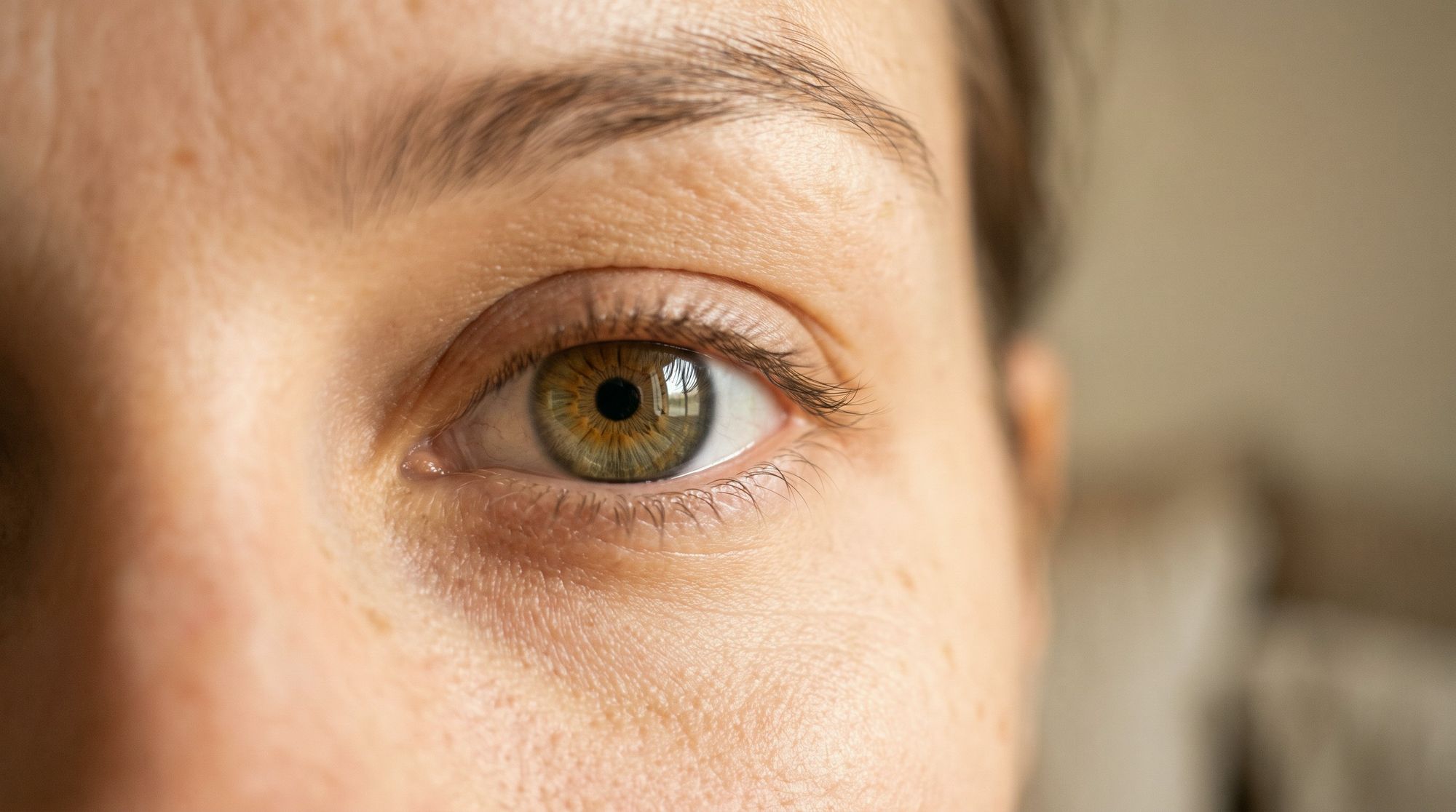
In short: Iris and tongue diagnosis are traditional naturopathic methods. They give clues about your constitution and the current state of your body. They can't diagnose diseases – that requires medical and laboratory testing.
Iris diagnosis
In naturopathy, the iris is used to assess a person's constitution: colour, structures and markings give clues about inherited weaknesses and patterns of reaction.
What it can show: clues about your constitution, how your body tends to react and possible weak points – from the perspective of humoral medicine, for example heat and cold, tension or irritation.
What it can't show: individual diseases. Studies have not been able to show that diseases can be reliably recognised in the iris. That's why I never use it to make a diagnosis, but as one building block in understanding you as a whole.
Tongue diagnosis
The tongue changes constantly and reflects your current state more closely. Among other things, I look at its colour, shape, coating, moisture and the veins underneath.
What it can show: clues about digestive strength, irritation, heat and cold, and metabolic strain. A thickly coated tongue or tooth marks along the edges, for example, can point to a strained digestion.
What it can't show: again, no diagnosis of disease. However, some changes to the tongue, for example with iron or vitamin B12 deficiency, are also recognised in conventional medicine and are a reason to check blood values.
How I use these methods
For me, the iris and tongue are part of an overall picture – together with your history, a physical examination and lab tests where needed. Only all of this together forms the basis for your treatment plan.
When should I see a doctor first?
New, severe or unexplained symptoms should be checked by a doctor first. Iris and tongue diagnosis don't replace a medical examination.
Find out more: Naturopathy.
{{cta}}